KHN Residency, Nebraska Trees, Gertrude Bell

Here in my second week at the lovely Kimmel Harding Nelson Residency in the small brick town of Nebraska City (the “city” was optimism sprung from early trade on the Missouri river) I’ve had a lot of quiet, a lot of space, and spent a lot of time staring at things and pushing the keys of my typewriter around.

I have this feeling that though the writing is not coming easily now, I’m storing up for a big summery storm. There has been nothing so inspiring at a residency, though, as being surrounded by artists who create gorgeous work and whose brains seem to work according to entirely different rules than my own.

For the last week or so, for the collection I’m working on at this residency, I’ve been sorting through photographs taken by Gertrude Bell around the turn of the century. I have very strong mixed feelings about Gertrude Bell’s person, as a woman who clearly believed in European superiority, and was a strident anti-suffragette (these seem so mind-bogglingly counter to everything she did), but who was also independent, passionate, a brilliant linguist and historian, and a lover of all things in the Middle East.  (Though while reading her letters I was amused to find out that she was a terrible cook and couldn’t spell her way out of a paper bag.)

There is no denying the haunting quality and relevance of her photographs, though, especially powerful as I stared at her photographs of Aleppo, so similar to photographs taken ten years ago, so completely different from photographs now.

I have a lot of feelings playing counterpoint here, as I delve more deeply into her history and what I can grasp of her mind. I’m not sure how to reconcile them, so for the moment I’ll just write.

Manifesto Thanksgiving 2016


Well, we’ve come around to another Thanksgiving. Last year I fasted on the day of Thanksgiving, choosing to give thanks and eat lots of yummy autumn food and spend time with my family and friends on a different day. Maybe it’s a little thing, and maybe it’s not the most effective thing, but it’s something I can do, and it’s something I can teach my children (should I ever have any). I’ve chosen to treat Thanksgiving Day as a day of remembrance, of honoring the indigenous people who have suffered at the hands of the white colonizers, who still suffer under a government and in a society that has chosen to forget them. So on this day, I fast to honor the indigenous people who are still here, and their ancestors who suffered so much.

It feels particularly important to talk about this now, as so many native peoples are finally getting attention from the majority populace in their struggle against the multi-billion dollar corporation Energy Transfer Partners, while the government does little to support them (mostly the opposite).

Here’s the thing—I am a woman of privilege, light-skinned (and with many more privileges beyond my skin color), and it every day it galls me to carry this privilege that shouldn’t even be a privilege. It shouldn’t be a privilege to not be racially profiled, to not have a higher a likelihood of rape, to have promises made by the government upheld.  I’m ashamed and disheartened to live so comfortably in a country where my privilege is built on genocide, bigotry, and centuries of broken promises.

And how will we remember our history? If Germany lives every day with the memory of the holocaust, owns it, makes future decisions based on that part of their past, teaches it, remembers it, then maybe they are setting a precedent for it to not happen again.  A country like Cambodia remembers Pol Pot but doesn’t have the education infrastructure to even make that a part of history yet—the Khmer Rouge killed everyone with an education, so there can be no imaginary line between past and present.

Why can we, as a country, not acknowledge the terrible genocide, terrorism, hate crimes, and racism perpetrated by our forefathers, so that we can make what reparations we can—including acknowledging that the descendants of those terrible events still live here, as part of this country, and have a need to be heard. If we cannot even apologize for these acts of terror and violence, what does that say about our values and our ego, as a nation? If we cannot teach the importance and weight of these events in schools, how will we create a nation that will not make the same mistake again?

Many people around me think that my stance on Thanksgiving, the way I treat the holiday and the way I talk about it is overdramatic. Many of those people are also folks who make disdainful noises at movements like Black Lives Matter as well. For the most part, those people are light-skinned people who are very comfortable in their lives. I don’t begrudge them that—how could I? But I do not understand how our own comfort should so blind us to the just cause of others who do not -cannot- enjoy many of those comforts, should blind us to their need to be heard and their struggles acknowledged.

Now, across our country, indigenous people are standing up for themselves and for what they believe in. They’re standing up for their lives, and we should be standing with them. We cannot continue sit comfortably in our privilege until it comes crashing down. We must be the instruments of its destruction.

「あん」という映画 and other things

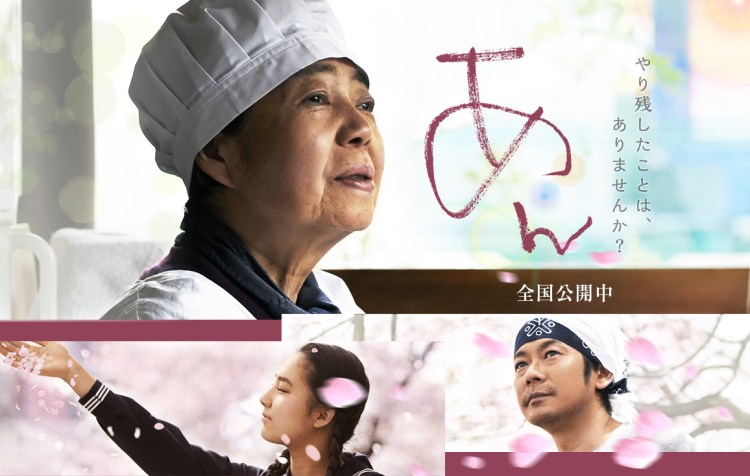
Tonight I stumbled across the film “An”, which refers to sweet red bean paste, when looking for something to watch while I studied.

Long story short, there was very little studying and lots of crying into my t-shirt.

I like a good emotional film that doesn’t leave me feeling manipulated. It can be a bit predictable, but if it’s simple and it’s written and shot well, I’ll probably enjoy it. I can’t stand films that manipulate emotions through overuse of music or cliche set-ups, but give me a quiet film with a lot of trees and silence and character studies, and I’m a sure sucker.

Anyway, “An” caught me pretty quickly through it’s quietness and it’s beautiful camera work, and well- let’s be honest- all the dorayaki and sweet bean paste. Sold. I’m a consummate foodie and beautiful and well appreciated food in a film will tip me over from mild interest to avid consumption.

But then one of the characters said this: 「こちらに非はない積りで生きていても、世界の無理解に押しつぶされてしまうことはあります。」

More or less “Even though we hope to move through life without being at a disadvantage, sometimes we are crushed by the ignorance of the world.”

And I just thought…yes. Those are the words.

an-film.jpg

This Week’s Studying: Drama Fever

So, in my efforts to trudge ever forward toward being prepared for the JLPT N2 exam in December, I now have a new study tactic…well, it’s an old study tactic that I’m gleefully reviving, really: good old binge-watching Japanese dramas!

I worked my way through Antique Cake Shop, something I watched in college with a friend, usually after going to the market and buying massive amounts of cake to accompany the episodes.

And now I’m onto something new (to me, though I think it was made while I was still in high school): Dr. Coto’s Clinic. I feel like I’ve found the Japanese version of Northern Exposure (the best TV show ever made, of course). Lot’s of medical and relationship drama-rama, without that thing that drives me absolutely bonkers about most contemporary Japanese dramas. I’m not sure exactly how to describe what it is- a type of contrivedness, absurdism, something- that I can’t stand. But this show is simple and sweet and if it’s at times a little ridiculous, well, so maybe I’m indulging the cheese lover inside while getting some good language practice. Nothing wrong with that, right?

Beginnings

I have always hated writing articles. Once, I nearly had a breakdown trying to write a book review that didn’t sound stale. I had strong feelings about the book…I just couldn’t write a sentence about it that didn’t feel empty.

In a way, I think I turned to poetry precisely because it expected nothing of me.

Now, of course, I know better. It is what I expect of me that is the problem. And that expectation is released only for a moment in poetry. When the last word is written, that problem of expectation comes crashing back, an anvil or a piano dropped precisely where I hoped it wouldn’t.

I’m still not sure how I feel about my relationship with writing articles and non-fiction pieces. But I do recognize the value of the exercise, and in my case, in its use as an method of accountability. Poems hold me accountable only to themselves. But my work will never grow satisfactorily if I cannot stretch myself in many directions, if I cannot create regular rhythms of learning and creating.

The last few weeks, in the final stages of a project that has demanded a large percentage of my attention for the past four or five years, I was reading religion scholar Karen Armstrong’s “The Spiral Staircase”. I stumbled upon this book in the beautiful little library at the hotel in Leh where I was staying during my exhibition, and with a propitious feeling that helped me ignore a prickle of guilt, I snuck the book into my bag the next day.

I have always had a strong relationship with Eliot’s “Ash Wednesday”, the poem around which the book is structured. I wrote my senior thesis on it in my undergraduate degree. While doing my degree in comparative religion. On a more surface level, these connections between myself and the author drew me to her work. I wanted to jump up and do a happy dance when I read the paragraph

Theology is–or should be–a species of poetry, which read quickly or encountered in a hubbub of noise makes no sense…You have to give it your full attention, wait patiently upon it, and make an empty space for it in your mind. And finally the work declares itself to you, steals deeply into the interstices of your being, line by line, note by note, phrase by phrase, until it becomes part of you forever.

This feeling of someone else finding the perfect set of words to describe something that has long felt elusive.

On a much deeper level, I resonate with her struggle with failure, and with finding a place for herself in the world, both as a human being and with regard to her career. I, too, have an interest in religion and religious studies that most of the people around me find difficult to relate to at best, and frequently seem to just find distasteful. I, too, watch many of my friends settle slowly into the spaces that their lives seem meant to occupy, while mine seems to always be bouncing off of corners and settling in only to find something else has completely popped out of place.

Obviously, most of us deal with these same feelings at some point or another. They tend to fade into the background during the highs, and seem to be all there is in the lows.

And it’s an oft overstated, seemingly obvious idea, but I needed to experience these words:

The great myths show that when you follow somebody else’s path, you go astray… if he [the hero] wants to succeed, he must enter the forest “at a point that he, himself, had chosen, where it was darkest and there was no path.”

Maybe it’s not only about finding ways to do the things I like. Maybe it’s about practice. Maybe it’s making essays like little paper boats and floating them out into the universe, regardless of whether they make it somewhere or are taken by the sea.